Who should own AI adoption: IT, the business units or executive management?
Executive management, together with the heads of the areas where AI is meant to make a difference, for example sales and marketing. Leadership decides where AI is used and which result counts. For every use case, one named person from the business unit is accountable. IT takes care of operations, security and integration, but it does not own the result. AI is not an IT ticket. It's a business decision.
Why “IT is on it” is the expensive option
When AI adoption lands with IT, it is treated like a technology project: tools are selected, licences handed out, policies written. What is often missing is the decision about which work should change and how success will be recognised. IT cannot make that decision, because it is accountable neither for revenue nor for the processes in sales or marketing.
The pattern I hear most often in conversations with executives: licences were rolled out, along with policies and a basic training, but nobody set goals or priorities. Rolled out is not led.
Who is accountable for what
| Role | Accountable for | Typical question |
|---|---|---|
| Executive management | Goals, priorities, budget, the shortlist of first use cases | Where should AI make a difference to the business first? |
| Head of the business unit, for example sales or marketing | The result of a use case, with one named person | How do we measure whether it works? |
| IT | Operations, security, connection to existing systems | How does this run securely and reliably? |
| Data protection and works council | Approvals, involved early instead of at the end | What do we need to clarify first? |
| The team | Everyday use, ideas, feedback | Where does it really save us time? |
One person, not one department
I regularly see the question of accountability being skipped, because it names a person rather than a department. But that is exactly the point: if “the project team” or “IT” is accountable, nobody is. Every AI use case needs a name that stands behind the result and decides what happens next.
This also applies to AI you did not introduce yourself: it is already built into many of the software products you buy. Someone in the company should be responsible for that too.
What executive management should actually do
- Decide on the first three use cases, using the Shortlist Rule.
- Name one accountable person for each use case, from the business unit.
- Set metrics before you start.
- Follow up regularly, for example monthly: what has changed, what do we decide next?
No AI project without a shortlist: collect 10 to 20 ideas, sort them by effort, value and risk, pick three.
How to do this step by step is in the answer How do you choose your first AI use cases?
Frequently asked questions
Do we need a dedicated AI role?
Whether you create a dedicated role for it is an organisational question. More important than the title is that every use case has one accountable person and that executive management sets the direction.
What if we lack the internal capacity?
Then there are two paths. If your team wants to implement itself, external guidance from the strategy sprint through to implementation is often enough. If the capacity is missing entirely, an interim manager can take over AI adoption, without months of recruiting.
What role does IT still play?
An important one: it makes sure AI runs securely, is connected to existing systems and that data is protected. IT is accountable for operations, leadership is accountable for the result.
Does executive management have to become AI experts?
No. It has to be able to decide where AI should make a difference to the business, and to follow up on whether it works. That does not require technical expertise.
More answers
- Where does AI deliver measurable results in sales first, in mid-sized companies?
- How do you choose your first AI use cases?
- Why do AI pilots get stuck, and how does AI get into daily business?
- Where does AI pay off in marketing for mid-sized companies, and where not?
- How can you tell how far your company really is with AI?
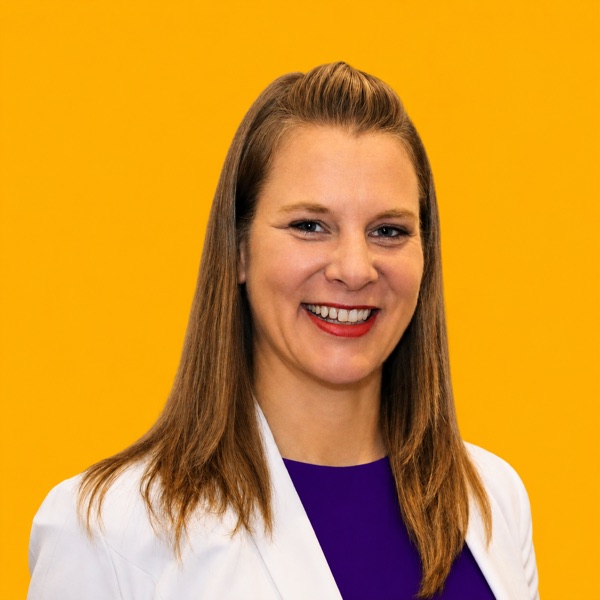
About the authorSelina Gaertner, AI for Leadership, Sales and Marketing. TÜV Rheinland certified AI Strategy Consultant, more than ten years in sales and marketing in medical technology, co-author of the Amazon bestseller “Fokus Mensch”.
Your next step: discuss your AI levers
In a free 30-minute conversation we clarify where AI has the biggest lever in your sales and marketing and which path suits you: led internally, guided externally or as an interim mandate.